
Suspension Parts
Upgrade, rebuild, or fine-tune your classic car or truck with suspension parts designed for street, performance, restoration, and lowered applications. Explore coil springs, leaf springs, shocks, coilovers, control arms, sway bars, spindles, 4-link systems, and other suspension components for popular American cars and trucks.


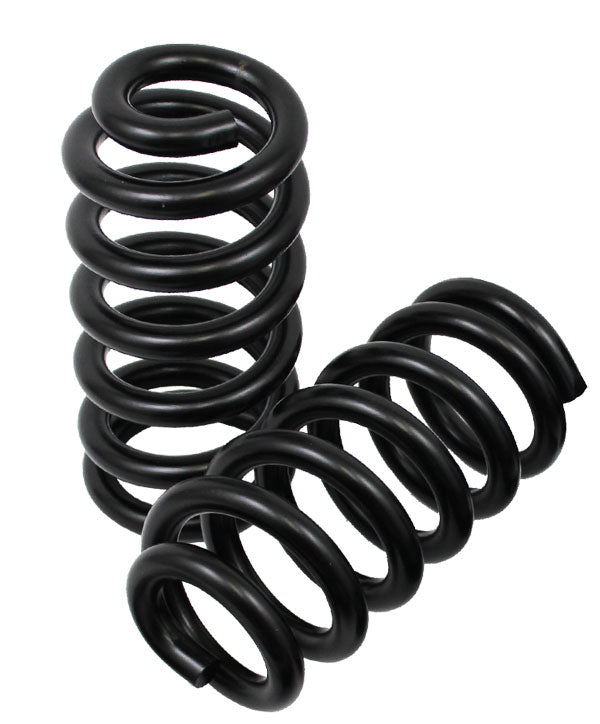


Build the Right Suspension for Your Classic
A suspension setup works as a complete system, with each component affecting ride height, suspension travel, alignment, handling, and tire clearance. Changing one part of the system can influence how the rest of the suspension operates, especially on lowered or performance-oriented builds.
This collection includes everything from individual replacement components to more substantial suspension upgrades. Options include coil and leaf springs, shocks and coilovers, tubular control arms, sway bars, panhard and trac bars, drop spindles, traction bars, shock relocation components, 4-link conversions, air ride components, and independent front suspension systems for a wide range of classic cars and trucks.
The right combination depends on the vehicle, existing suspension design, desired ride height, wheel and tire setup, and how the vehicle will be driven. Whether the goal is restoring worn suspension components, lowering a classic truck, improving handling, or building a complete pro-touring setup, matching the components as a system helps create a suspension package that works together correctly.
FAQ
How do I choose the right suspension parts for my vehicle?
Start with the year, make, and model of the vehicle and identify whether the current suspension is stock or has already been modified. From there, consider the desired ride height, front and rear suspension type, wheel and tire dimensions, and how the vehicle will be used. Many suspension components are vehicle-specific, so fitment should be confirmed for the exact application and existing suspension configuration.
What suspension parts can be used to lower a classic car or truck?
Depending on the vehicle, lowering can be achieved with components such as lowering coil springs, leaf springs, drop spindles, coilovers, lowering blocks, or complete suspension systems. Different methods affect suspension geometry and travel in different ways. More substantial drops may also require shock relocation, alignment correction, additional axle clearance, or other supporting components.
What is the difference between coilovers and standard shocks and springs?
A conventional suspension uses separate springs and shock absorbers, while a coilover combines the coil spring and shock into a single assembly. Many coilover systems also provide adjustable ride height and, depending on the design, adjustable damping. The best option depends on the vehicle, suspension layout, desired adjustability, and intended use.
When should tubular control arms be used?
Tubular control arms are commonly used when rebuilding or upgrading the front suspension of a classic vehicle. Depending on the specific design, they can work with stock-height or lowered suspension systems and may provide geometry changes suited to modified applications. Control arms must match the vehicle, spindle, spring or coilover configuration, and other front suspension components.
What do sway bars and panhard bars do?
Sway bars help control body roll by connecting the suspension movement from one side of the vehicle to the other. Panhard or trac bars are used on certain rear suspension designs to control lateral movement of the rear axle. They perform different jobs, and either component may be important when upgrading the handling or geometry of a classic car or truck.
Is a 4-link suspension conversion right for my build?
A 4-link conversion changes the way the rear axle is located and controlled by replacing or reconfiguring parts of the original rear suspension. These systems are commonly used in lowered, performance, pro-touring, and custom builds where additional control over axle movement and suspension geometry is desired. Compatibility with the rear axle, shocks or coilovers, frame mounting points, exhaust, and available clearance should all be considered.
Can suspension upgrades affect steering, brakes, or wheel fitment?
Yes. Components such as drop spindles, control arms, coilovers, springs, and major suspension conversions can change ride height, alignment, wheel position, suspension travel, and available clearance. Brake components, steering geometry, wheel diameter, offset, backspacing, and tire size should be considered together when planning a modified suspension setup.